|
Page 1
2 3
4 5
6 7
8
Scientific
name: Alopias superciliosus
COMMON
NAME: big eye thresher
Spanish name: Tiburón Zorro Ojón
Description:
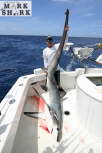
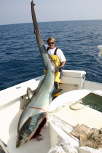
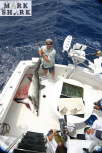
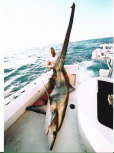
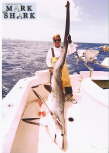
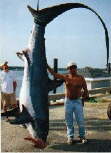
the big eye thresher is also known as the Big eye
Fox, its easy to recognize from the other threshers
because of its deep grooves above its very large
eyes, which are located almost on top of the head.
Its pectoral fins are long, curved on the trailing
margins and rounded at the tips.
Size:
is the biggest from all thresher sharks, it reaches
4.6 meters.
Distribution:
this specie occurs in nearly all tropical and subtropical
open oceans and coastal areas, from the surface
to depths of about 500 meters.
Feeding:
it is known to feed in the water column on pelagic
mackerel, tuna, herring, and billfishes as well
as on bony fishes and squid near the bottom.
Reproduction:
females reach reproductive maturity when about 2.6
meters in length.
Particularities:
embryos are cannibalistic in the uterus and only
two live pups are born. These are almost 1 meter
long, big eye thresher also bear cannibalistic pups,
but litter sizes range from two to four, suggesting
that some embryos coexist through gestation.
The
threshers are an abundant and globally distributed
species.The thresher shark is considered a "Data
Deficient" species by the World Conservation
Union (IUCN). A taxon is considered "Data Deficient"
when there is inadequate information to make a direct,
or indirect, assessment of its risk of extinction
based on its distribution and/or population status.
This species is on its way to recovery in waters
off the coast of California due largely to fishery
management measures and is now upgraded and considered
"Near Threatened" in this region. The
IUCN is a global union of states, governmental agencies,
and non-governmental organizations in a partnership
that assesses the conservation status of species.
Thresher numbers have at least remained the same
and likely higher since 2000.
Lack of data from other locations have made it difficult
to access population fluctuations at an international
level.
Most scientists feel that the Threshers are in no
danger of being overfished..
|